Almost everything that makes the first months in the Netherlands stressful comes down to sequencing. A handful of essential steps have to happen in a particular order, several have legal deadlines attached, and each one tends to be a prerequisite for the next. Miss the order and you end up stuck — unable to open a bank account because you have no BSN, unable to get a BSN because you have not registered, unable to register because you have no address.
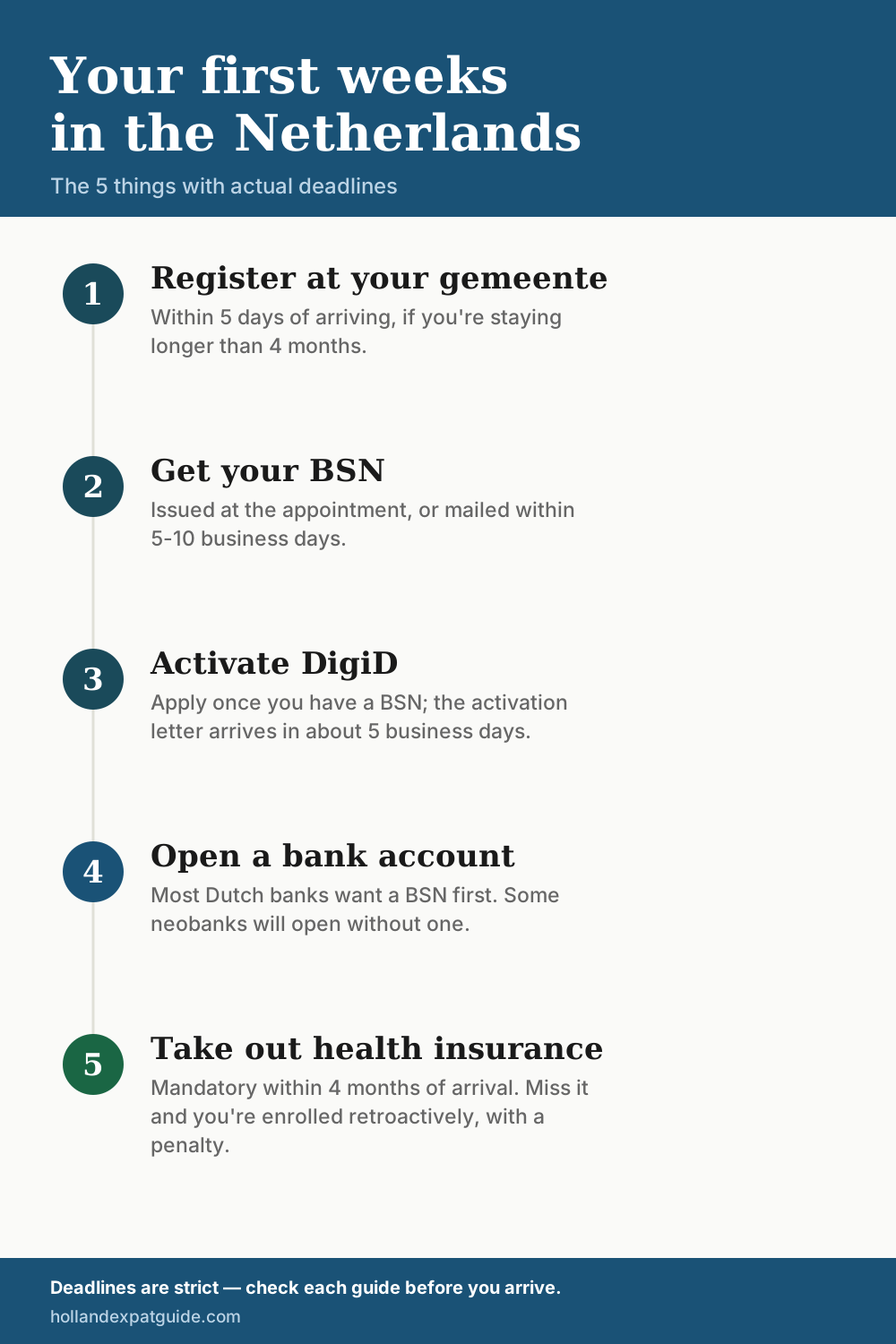
This is the sequence, with the deadlines that actually carry consequences. Each step links to the full guide for that topic.
Before you arrive: secure an address
Everything downstream depends on having a registerable Dutch address, so this is the real first step even though it happens before you land. A great many gemeenten will not register you at a short-term holiday let, and some landlords explicitly forbid registration in the tenancy agreement — a clause worth checking before you sign anything. If you are arriving without permanent housing, look for a rental that explicitly permits registration (inschrijving toegestaan), even if it is temporary.
See: renting an apartment as an expat and choosing which city to live in.
Step 1 — Register at your gemeente (within 5 days)
If you are staying longer than four months, Dutch law requires you to register at your local municipality within five days of arriving. In practice gemeenten cannot always offer an appointment inside that window, so the sensible approach is to book the appointment the moment you know your arrival date and keep evidence that you tried to comply. Bring your passport, your tenancy agreement, and a legalised birth certificate — the birth certificate requirement catches people out constantly, because obtaining an apostilled copy from your home country can take weeks.
See: registering at the gemeente, step by step.
Step 2 — Receive your BSN
Your citizen service number is issued as part of that registration appointment. Some gemeenten hand it over on the spot as a paper certificate; others post it to your address within five to ten business days. Nothing much can proceed without it: it is required for employment, tax, healthcare, and most banking.
See: the BSN explained.
Step 3 — Apply for DigiD
DigiD is the national digital identity used to log in to tax, healthcare, benefits, and municipal services. You can only apply once you have a BSN, and activation runs through a letter posted to your registered address, typically arriving within about five business days. Apply as soon as your BSN comes through, because the wait is unavoidable and a great deal of admin is gated behind it.
See: getting DigiD as an expat.
Step 4 — Open a bank account
Most traditional Dutch banks want a BSN before they will open a current account, which is why this sits after registration rather than before. If you need an account sooner — to receive a first salary, or to pay a deposit — several neobanks with Dutch IBANs will open an account without a BSN, which is a reasonable stopgap while the rest of the paperwork catches up.
See: best bank accounts for expats and opening an account without a BSN.
Step 5 — Take out health insurance (within 4 months)
This is the deadline with the sharpest teeth. Everyone living or working in the Netherlands must hold Dutch basic health insurance within four months of arrival or the start of employment. Miss it and you are enrolled retroactively and charged a penalty premium, so the cost of forgetting is real money rather than an administrative scolding. Cover is backdated to your registration date once you take out a policy, which means the premium you owe starts accruing from arrival regardless of when you get around to it.
See: the complete health insurance guide.
Then, when the essentials are done
With registration, BSN, DigiD, banking, and insurance in place, the remaining setup is comparatively relaxed and has no hard deadlines. Sort out internet and energy, pick up a mobile plan, and — if you drive — start the process of exchanging your licence, which has its own timing rules worth reading early.
If you are arriving for skilled work, check whether you qualify for the 30% ruling before your first payroll run — the application is made through your employer and is significantly easier to handle at the start of employment than retrospectively.
A realistic timeline
For most people the essentials take somewhere between three and eight weeks end to end, and the pacing is set almost entirely by appointment availability at the gemeente and by postal delivery of the DigiD activation letter. Neither can be rushed. What you can control is starting early: book the gemeente appointment before you fly, and order a legalised birth certificate well in advance. Those two decisions remove most of the delay that expats complain about.